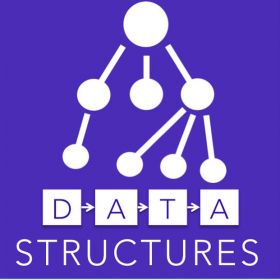
Course Name: Data Structures & Algorithms
Course Duration: 4 Months
Course Objectives
By the end of 4 months, learners will be able to:
-
Write clean, efficient code using core DSA patterns in Python or C++ (learner’s choice).
-
Choose the right data structure/algorithm for real problems and justify trade-offs.
-
Analyze time and space using Big-O and optimize solutions iteratively.
-
Build and ship micro-products (CLI tools, libraries, APIs) that can be monetized.
-
Solve interview-style problems with structured thinking and clarity.
-
Maintain a portfolio (GitHub) showcasing solved problems and capstone work.
Course Overview
-
Duration: 4 Months (16 Weeks)
-
Load: ~8–10 hrs/week (2 weekday evenings × 2 hrs + Sat/Sun lab 3–4 hrs)
-
Mode: Blended (in-person/online), bilingual support (English + Hindi/Marathi as needed)
-
Track Choice: Python or C++ from Week 1 (Java optional add-on)
-
Labs & Tools: VS Code, GCC/Clang or Python 3.x, Git & GitHub, unit testing, simple profiling
-
Assessment: Quizzes (20%), Labs (30%), Projects (40%), Participation (10%)
-
Prerequisites: Basic computer usage; prior coding is helpful but not mandatory
Teaching Methodology
-
Flipped micro-lectures: short, sharp concept drops; class time = practice.
-
Problem-of-the-Day: warm-up puzzles to build rhythm.
-
Pair programming & code reviews: learn to reason, argue, and improve.
-
Pattern-first approach: master templates (two-pointers, sliding window, DP, etc.).
-
Weekly micro-project: apply concepts to small, useful tools.
-
Show & ship: push to GitHub every week, present in lightning demos.
-
Interview drills: timed practice + whiteboard walkthroughs.
Why This Matters
-
Freelancing: Build utilities (data parsers, optimizers, CLI tools), charge per project/feature.
-
Product gigs: Contribute to startups/SMEs—faster code = lower cloud bills.
-
Teaching/tutoring: Run local DSA clubs, paid workshops for school/college students.
-
Competitive placements: Strong DSA is still the core filter in many Indian tech interviews.
-
Entrepreneurship: Package your algorithms as micro-SaaS or libraries (billing, routing, scheduling).
Detailed Syllabus
Month 1 — Foundations that Stick
Week 1: Programming Basics & Mindset
-
Variables, data types, I/O; functions; debugging; CLI basics; Git/GitHub.
-
Big-O intuition; benchmarking simple loops.
-
Lab: Build a “Time-It” utility to compare naive vs optimized loops.
Week 2: Control Flow & Core Patterns
-
Loops, conditionals, recursion vs iteration; call stack.
-
Pattern: Two-Pointers, Sliding Window (intro).
-
Lab: Subarray sums, longest unique substring (string/window practice).
Week 3: Data Structures 1 — Arrays & Strings
-
One-D, Two-D arrays, matrix traversal; string manipulation; hashing basics.
-
Lab: Matrix spiral, frequency counter via hash map; Micro-project: CSV cleaner (CLI).
Week 4: Data Structures 2 — Linked Lists & Complexity
-
Singly, doubly, circular lists; fast/slow pointers; in-place reversals.
-
Lab: Reverse in k-groups, detect cycle; Quiz 1.
Month 2 — Classic Structures & Searching
Week 5: Stacks & Queues
-
Stack ADT & applications (parentheses, expression eval), Queue & Deque, circular queues.
-
Lab: Min-stack, sliding window maximum with deque; Micro-project: Undo/Redo engine.
Week 6: Trees 1 — Binary Trees & BSTs
-
Tree traversal (DFS: preorder/inorder/postorder), BFS (level order), BST ops.
-
Lab: Height, diameter, LCA (recursive & iterative).
Week 7: Trees 2 — Balanced Trees & Heaps
-
AVL basics, heap (min/max), priority queue use-cases.
-
Lab: k-largest/merge k-sorted lists; Micro-project: Task scheduler using heap.
Week 8: Graphs 1 — Representations & Traversals
-
Adjacency list/matrix; DFS/BFS; connected components; topological sort.
-
Lab: Course scheduling (DAG), cycle detection; Quiz 2.
Month 3 — Algorithms that Pay Off
Week 9: Graphs 2 — Shortest Paths & MST
-
Dijkstra, BFS on unweighted graphs, Bellman-Ford (overview); MST (Kruskal/Prim).
-
Lab: City bus route finder (shortest path), network clustering (MST).
Week 10: Searching & Sorting Deep Dive
-
Linear vs Binary Search; boundary finding; custom comparators.
-
Bubble/Selection/Insertion (for insight), Merge/Quick/Heap Sort (for practice).
-
Lab: Sort visualizer; Micro-project: Log sorter for SMEs.
Week 11: Greedy & Divide-and-Conquer
-
Activity selection, interval scheduling, Huffman coding idea.
-
Divide-and-Conquer patterns; Master Theorem (intuition).
-
Lab: Meeting rooms, min platform problem; closest pair (outline).
Week 12: Recursion & Dynamic Programming
-
Overlapping subproblems, memoization vs tabulation; 1-D, 2-D DP.
-
Lab: Knapsack, coin change, LIS; Quiz 3.
Month 4 — From Patterns to Products
Week 13: Advanced Hashing & Practical Optimizations
-
Collision handling, custom hash; sets/maps; amortized analysis.
-
Lab: UPI-like transaction deduplicator (hash set/map).
Week 14: Problem Solving Playbook
-
Pattern catalog: prefix sums, difference arrays, binary search on answer, bit tricks.
-
Lab: Allocate books/paint fence (binary search on answer), bitmask DP (intro).
Week 15: Capstone Build Sprint
Note: The course contents are flexible and can be modified based on the specific requirements of learners or location, ensuring relevance and customization to meet the needs of Indian students interested in self-employment and entrepreneurship in Artificial Intelligence.
Course Name: Data Structures & Algorithms
Course Duration: 4 Months
Course Objectives
By the end of 4 months, learners will be able to:
-
Write clean, efficient code using core DSA patterns in Python or C++ (learner’s choice).
-
Choose the right data structure/algorithm for real problems and justify trade-offs.
-
Analyze time and space using Big-O and optimize solutions iteratively.
-
Build and ship micro-products (CLI tools, libraries, APIs) that can be monetized.
-
Solve interview-style problems with structured thinking and clarity.
-
Maintain a portfolio (GitHub) showcasing solved problems and capstone work.
Course Overview
-
Duration: 4 Months (16 Weeks)
-
Load: ~8–10 hrs/week (2 weekday evenings × 2 hrs + Sat/Sun lab 3–4 hrs)
-
Mode: Blended (in-person/online), bilingual support (English + Hindi/Marathi as needed)
-
Track Choice: Python or C++ from Week 1 (Java optional add-on)
-
Labs & Tools: VS Code, GCC/Clang or Python 3.x, Git & GitHub, unit testing, simple profiling
-
Assessment: Quizzes (20%), Labs (30%), Projects (40%), Participation (10%)
-
Prerequisites: Basic computer usage; prior coding is helpful but not mandatory
Teaching Methodology
-
Flipped micro-lectures: short, sharp concept drops; class time = practice.
-
Problem-of-the-Day: warm-up puzzles to build rhythm.
-
Pair programming & code reviews: learn to reason, argue, and improve.
-
Pattern-first approach: master templates (two-pointers, sliding window, DP, etc.).
-
Weekly micro-project: apply concepts to small, useful tools.
-
Show & ship: push to GitHub every week, present in lightning demos.
-
Interview drills: timed practice + whiteboard walkthroughs.
Why This Matters
-
Freelancing: Build utilities (data parsers, optimizers, CLI tools), charge per project/feature.
-
Product gigs: Contribute to startups/SMEs—faster code = lower cloud bills.
-
Teaching/tutoring: Run local DSA clubs, paid workshops for school/college students.
-
Competitive placements: Strong DSA is still the core filter in many Indian tech interviews.
-
Entrepreneurship: Package your algorithms as micro-SaaS or libraries (billing, routing, scheduling).
Detailed Syllabus
Month 1 — Foundations that Stick
Week 1: Programming Basics & Mindset
-
Variables, data types, I/O; functions; debugging; CLI basics; Git/GitHub.
-
Big-O intuition; benchmarking simple loops.
-
Lab: Build a “Time-It” utility to compare naive vs optimized loops.
Week 2: Control Flow & Core Patterns
-
Loops, conditionals, recursion vs iteration; call stack.
-
Pattern: Two-Pointers, Sliding Window (intro).
-
Lab: Subarray sums, longest unique substring (string/window practice).
Week 3: Data Structures 1 — Arrays & Strings
-
One-D, Two-D arrays, matrix traversal; string manipulation; hashing basics.
-
Lab: Matrix spiral, frequency counter via hash map; Micro-project: CSV cleaner (CLI).
Week 4: Data Structures 2 — Linked Lists & Complexity
-
Singly, doubly, circular lists; fast/slow pointers; in-place reversals.
-
Lab: Reverse in k-groups, detect cycle; Quiz 1.
Month 2 — Classic Structures & Searching
Week 5: Stacks & Queues
-
Stack ADT & applications (parentheses, expression eval), Queue & Deque, circular queues.
-
Lab: Min-stack, sliding window maximum with deque; Micro-project: Undo/Redo engine.
Week 6: Trees 1 — Binary Trees & BSTs
-
Tree traversal (DFS: preorder/inorder/postorder), BFS (level order), BST ops.
-
Lab: Height, diameter, LCA (recursive & iterative).
Week 7: Trees 2 — Balanced Trees & Heaps
-
AVL basics, heap (min/max), priority queue use-cases.
-
Lab: k-largest/merge k-sorted lists; Micro-project: Task scheduler using heap.
Week 8: Graphs 1 — Representations & Traversals
-
Adjacency list/matrix; DFS/BFS; connected components; topological sort.
-
Lab: Course scheduling (DAG), cycle detection; Quiz 2.
Month 3 — Algorithms that Pay Off
Week 9: Graphs 2 — Shortest Paths & MST
-
Dijkstra, BFS on unweighted graphs, Bellman-Ford (overview); MST (Kruskal/Prim).
-
Lab: City bus route finder (shortest path), network clustering (MST).
Week 10: Searching & Sorting Deep Dive
-
Linear vs Binary Search; boundary finding; custom comparators.
-
Bubble/Selection/Insertion (for insight), Merge/Quick/Heap Sort (for practice).
-
Lab: Sort visualizer; Micro-project: Log sorter for SMEs.
Week 11: Greedy & Divide-and-Conquer
-
Activity selection, interval scheduling, Huffman coding idea.
-
Divide-and-Conquer patterns; Master Theorem (intuition).
-
Lab: Meeting rooms, min platform problem; closest pair (outline).
Week 12: Recursion & Dynamic Programming
-
Overlapping subproblems, memoization vs tabulation; 1-D, 2-D DP.
-
Lab: Knapsack, coin change, LIS; Quiz 3.
Month 4 — From Patterns to Products
Week 13: Advanced Hashing & Practical Optimizations
-
Collision handling, custom hash; sets/maps; amortized analysis.
-
Lab: UPI-like transaction deduplicator (hash set/map).
Week 14: Problem Solving Playbook
-
Pattern catalog: prefix sums, difference arrays, binary search on answer, bit tricks.
-
Lab: Allocate books/paint fence (binary search on answer), bitmask DP (intro).
Week 15: Capstone Build Sprint
Note: The course contents are flexible and can be modified based on the specific requirements of learners or location, ensuring relevance and customization to meet the needs of Indian students interested in self-employment and entrepreneurship in Artificial Intelligence.